Health and Safety Policy — Office Clearance Northolt
 This Health and Safety policy sets out the commitment of Office Clearance Northolt to protect employees, contractors, clients and the public during all office clearance, rubbish removal and waste disposal activities. The policy applies to all site operations, including commercial clearance, office refurbishment clear-outs and routine rubbish collection performed by the rubbish company. The aim is to minimise harm, prevent incidents and ensure compliance with recognised good practice for waste removal services across all projects.
The scope of this policy covers operational planning, safe systems of work, training and supervision, handling of general and hazardous waste, vehicle operations and interactions with third-party contractors. It recognises that effective office clearance requires risk-based planning before any work begins and a clear allocation of responsibilities. All staff and subcontractors engaged in clearance work must follow the processes described here and report hazards promptly.
 Management responsibilities are central: senior management will provide resources, lead risk assessment processes and set measurable safety objectives for the clearance service. Supervisors will ensure that site-based safety plans are implemented and that operatives receive appropriate instruction, information and personal protective equipment (PPE). Employees are expected to work safely, follow instructions and notify their line manager of any unsafe conditions. This policy is kept under regular review and updated when operations change.
Risk Assessment, Safe Systems and Training
Before any office clearance or rubbish removal task begins, a documented risk assessment will be completed to identify significant hazards and to define control measures. Typical hazards include manual handling injuries from bulky furniture, sharps and biohazardous materials in discarded items, slips, trips and falls, vehicle movements during pickups and potential exposure to hazardous substances. Controls include task-specific method statements, mechanical aids, exclusion zones and traffic management when vehicles are on site.
 Training and competence are essential. The company provides induction training for new staff and periodic refresher sessions covering manual handling, safe lifting techniques, use of PPE, safe operation of compactors and flatbed vehicles, and procedures for handling potentially hazardous waste. Records of training and competency checks are maintained centrally. Supervisors will confirm competence before allowing operatives to undertake specialist clearance tasks.
Personal protective equipment is provided free of charge and must be worn where necessary. This includes gloves, high-visibility clothing, steel-toe footwear and eye protection. For tasks with dust or fume risks, appropriate respiratory protection and controls will be used. The company promotes a safety culture where wearing PPE is considered standard practice during all waste removal and clearing operations.
Operational Controls, Contractors and Emergency Procedures
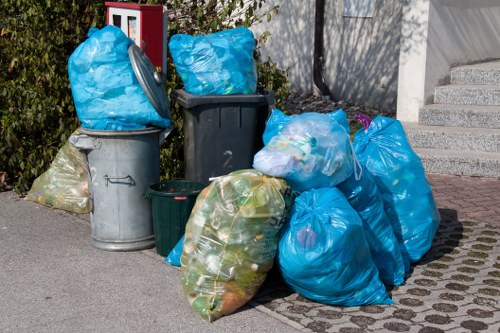
Worksites will be managed to prevent accidents. Controls include clear segregation of pedestrian and vehicle routes, secure storage for waste pending collection and safe stacking of bulky items to prevent collapse. Subcontractors engaged for specialist disposal or hazardous materials removal will be required to provide evidence of competence and their own safety arrangements. All contractors must comply with the company's safety expectations for clearance operations.
 Monitoring and inspection are carried out routinely. Supervisors will conduct pre-start checks, toolbox talks and site inspections to verify safe systems are in place. Incident reporting procedures require immediate notification of any accident, injury or near miss. An investigation will follow, with remedial actions documented and shared across the team to prevent recurrence. The policy emphasises learning from incidents rather than blame.
 Records and documentation are maintained for risk assessments, method statements, waste transfer notes, training and incident logs. The company commits to continual improvement; safety performance is reviewed at management meetings and objectives are set to reduce injuries and improve safe working during commercial clearance and rubbish removal operations. Policies are communicated to staff, and safety performance forms part of contractor selection and procurement processes.
The following standard operating elements apply to all clearance and rubbish collection tasks:
- Planning: Site survey and bespoke method statement before mobilising teams.
- Controls: Use of mechanical aids and safe lifting techniques to reduce manual handling risks.
- Segregation: Clear labelling and separation of recyclable, general and hazardous waste.
- Competence: Training and verification of staff and subcontractor competence.
- Emergency: Established incident response, first aid provision and access to emergency services when required.
Health surveillance is provided where appropriate based on identified risks. The company supports health and wellbeing initiatives and encourages reporting of ergonomic concerns. Inspections and audits validate that waste removal and clearance operations uphold safety standards and environmental responsibilities.
This policy is endorsed by senior management and communicated to all employees and relevant subcontractors. Office Clearance Northolt recognises that safety is integral to delivering a professional and reliable clearance service. Regular review ensures the policy remains effective and aligned with changes in operational practice and industry standards. By following the measures described herein, the organisation demonstrates its commitment to protecting people, property and the environment during every clearance and rubbish removal activity.
